



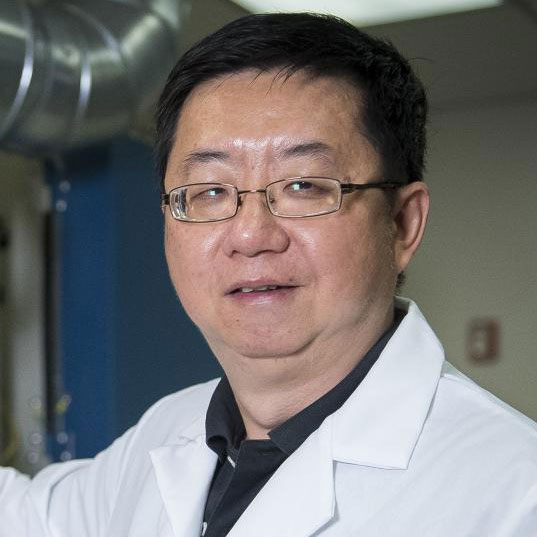
Kang Xu | US Army Research Lab: Why did a petroleum giant's board reject the first Li-ion prototype, and how did Sony turn it into the 18650 cell?
10:04 - 12:33
Other snippets from this talk
Summary of the clip:
Why did a petroleum giant's board reject the first Li-ion prototype, and how did Sony turn it into the 18650 cell?
Asahi, a petroleum giant, produced a very successful first laboratory prototype of the lithium-ion battery, but its board was not interested. They judged a battery not high-tech, with very limited margin and market, and not worthwhile to invest in building a manufacturing line. Around 1986 the technology was transferred to Sony.
Sony saw it differently as an electronics company: portable electronics would dominate the coming decades. Even a Walkman running cassettes consumed a lot of power — a few AA batteries died after one cassette and were thrown away, creating landfill and pollution. Sony knew a rechargeable, more environmentally friendly, higher energy density battery was needed, took over the idea and poured resources in.
Within a few years Sony commercialized it, announcing the battery in early 1990 at a conference in Florida — the first appearance of the name lithium-ion battery, which Sony gave it. Chief engineer Nishi; the initial configuration was the 18650, 18 mm diameter by 65 mm long, sized so camcorders or phones fit an adult's single hand. The 34,000 mAh shown is today's capacity.
In this short video, you can learn:
* Asahi's board rejected the successful prototype, judging batteries low-margin, non-high-tech and not worth a manufacturing line.
* Sony's Walkman experience with disposable AA cells made rechargeable, higher energy density and more environmentally friendly batteries an obvious need.
* The 18650 — 18 mm diameter, 65 mm long — was sized for camcorders and phones to fit an adult's single hand.
📋 **Clip Abstract** Asahi built a successful first lithium-ion laboratory prototype, but its petroleum-company board saw no margin or high-tech case, so the technology moved to Sony around 1986. Sony, betting on portable electronics, commercialized it within a few years, announced the lithium-ion name at a Florida conference in early 1990, and shipped the 18650 format sized for handheld devices.
About the speaker:
* Speaker: Kang Xu
* Company: US Army Research Lab
* Event: Solid-State Batteries: Innovations, Promising Start-ups, Future Roadmap
* Location: Online
Join TechBlick to learn about the state of the art in solid state batteries, Si anode, advanced cathodes, sodium batteries, and beyond
https://www.techblick.com/
#18650Format, #WalkmanPowerDraw, #AsahiPrototype, #SonyCommercialization, #BatteryHistory, #ElectrochemicalStorage
This is a highlight of the presentation:
Before Li-ion Batteries
More Highlights from the same talk.
06:00 - 07:24
What two cell parameters make lithium the unbeatable anode, and why is its low potential so foundational?
What two cell parameters make lithium the unbeatable anode, and why is its low potential so foundational?
A 1913 JACS paper reported that lithium can produce the highest cell potential when coupled, and that conclusion has not changed. Across the entire periodic table, no other metal can beat lithium in electrochemical potential. That discovery set the foundation for today's pursuit of lithium-based batteries.
Battery energy is decided by two factors: capacity and cell voltage. Lithium metal, or the lithium element, has a combination of both factors. That gives it an advantage over many other elements—almost all the other elements in the periodic table. This combination makes lithium metal very unique and special.
Lithium is the first metal in the periodic table, and it has the lowest electrochemical potential. Even when lithium metal itself is not used as cathode or anode, the nature inherited from this property sets the foundation for many advantages lithium batteries have. That inherited property still sets the foundation.
In this short video, you can learn:
* The 1913 JACS paper established lithium's highest cell potential when coupled, a conclusion unchanged since.
* Battery energy is set by capacity and cell voltage, and lithium combines both advantages over almost all other elements.
* Lithium's position as the first metal and its lowest electrochemical potential underpin advantages even when lithium metal is not the electrode.
📋 **Clip Abstract** A 1913 JACS paper found that lithium can produce the highest cell potential when coupled, and no metal across the periodic table has beaten its electrochemical potential since. Battery energy depends on capacity and cell voltage; lithium combines both, and its lowest electrochemical potential as the first metal underpins lithium-based battery advantages even when lithium metal is not used as cathode or anode.
About the speaker:
* Speaker: Kang Xu
* Company: US Army Research Lab
* Event: Solid-State Batteries: Innovations, Promising Start-ups, Future Roadmap
* Location: Online
Join TechBlick to learn about the state of the art in solid state batteries, Si anode, advanced cathodes, sodium batteries, and beyond
https://www.techblick.com/
#LithiumMetalAnode, #ElectrochemicalPotential, #CellVoltageCapacity, #JACS1913, #LithiumBatteries, #SolidStateBatteries
13:08 - 15:37
Why did a handmade three-car T-Zero, not a mass-market EV, lead Tesla to 7,000 18650 cells?
Why did a handmade three-car T-Zero, not a mass-market EV, lead Tesla to 7,000 18650 cells?
Before Li-ion, many EV versions existed, but their batteries "suck," so none succeeded. In 2000, a few people in California started AC Propulsion and tried putting lithium-ion into an EV. They built the handmade sports car T-Zero; only three were built. On the highway, it accelerated 0 to 60 mph in a few seconds without noise.
Among highway-test spectators was a California millionaire impressed enough to offer mass-producing the car. AC Propulsion was not interested and turned him away. He decided to start his own company, Tesla, in 2003. This millionaire was Martin Eberhard, not Elon Musk. Tesla needed money for manufacturing, so Elon Musk was hired in 2004 as one of the first employees.
Within a few years, Musk took over the board and fired original founder Eberhard; Tesla became his company. He is credited with funding money and resources and making manufacturing possible. The first Roadster test still used tiny 18650 batteries—about 7,000 cells stringed together in parallel and series—placed underneath the vehicle. That configuration is described as the revolutionized age of EV.
In this short video, you can learn:
* AC Propulsion built only three handmade T-Zero sports cars and demonstrated lithium-ion EV acceleration of 0 to 60 mph in a few seconds without noise.
* Martin Eberhard, not Elon Musk, founded Tesla in 2003 after AC Propulsion rejected his mass-production offer.
* The first Roadster test used about 7,000 tiny 18650 cells connected in parallel and series and placed underneath the vehicle.
📋 **Clip Abstract** Before lithium-ion, EVs failed because their batteries were poor. A handmade three-car AC Propulsion T-Zero convinced Martin Eberhard to found Tesla in 2003; Musk joined in 2004, and the first Roadster test used about 7,000 18650 cells in parallel and series under the vehicle.
About the speaker:
* Speaker: Kang Xu
* Company: US Army Research Lab
* Event: Solid-State Batteries: Innovations, Promising Start-ups, Future Roadmap
* Location: Online
Join TechBlick to learn about the state of the art in solid state batteries, Si anode, advanced cathodes, sodium batteries, and beyond
https://www.techblick.com/
#ACPropulsionTZero, #18650CellPack, #ParallelSeriesStringing, #RoadsterPrototype, #LithiumIonBatteries, #EVBatteryHistory
About this talk
→ Before Li-ion Batteries · Kang Xu · Battery Materials: Next-Gen & Beyond Lithium Ion 2022