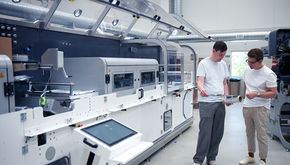
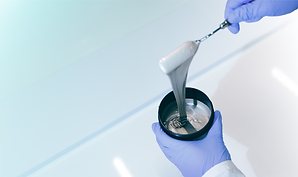
Author: Cesar Omar Ramirez Quiroz | corq@gm.dk A functional material may perform well in the laboratory but producing it continuously and consistently is a very different challenge. This is a common issue in printed electronics, batteries, fuel cells, solar technologies, and other functional thin-film applications. As a process moves from laboratory trials to pilot production and industrial manufacturing, more variables come into play. Scale-up is not simply about increasing speed or using a wider web. The material, substrate, equipment, and individual production stages all need to work together. What changes during scale-up? Laboratory development often involves short samples, small quantities of material, and relatively slow processing speeds. Parameters can be adjusted between trials, and each production step can be examined separately. In roll-to-roll manufacturing, the substrate moves continuously through several stages. Coating, drying, curing, web handling, registration, inspection, and converting become part of the same process. Increasing the line speed, for example, reduces the time available for drying or curing. Moving to a wider web can increase output, but it may also make coating uniformity and tension control more difficult. A successful laboratory result is therefore only the starting point. The next task is to find a stable process window that can maintain the required quality throughout a complete production run. We are exhibiting at The Future of Electroni...