Search Results
Search this site
1075 results found with an empty search
- Ynvisible | Established and new applications of printed e-paper displays | June 2022
This is an auto-transcribed version of the original presentation without human control Thank you very much. So ynvisible makes printed epaper displays and solutions finished products. We make ultra low power segmented displays and we can make them any shape, size, what have you. Without expensive the expensive, say an lcd or epdm electrolytic e-paper because ours is printed. So here's just a quick look at our stack up. We have a moisture barrier, graphical layer. We have an electrolyte and electrodes so we can make really any shape or size, but we do not do high resolution pixel size displays. Right. So we can put information where you need it. We don't make it look maybe super pretty, but we can get the information cheaply and also low power, flexible where you need it. So here's a quick comparison between the competitive technologies, right? So invisible makes the printed e-paper with ink, intellectual theoretic, and then memory and pixel is an LCD based technology. So you can see clearly that there is an area where the printed technology fits quite better if you need thin, if you need a flexible, customizable and price. So we have customers that have been used in electrical, forensic or ink and they're using Invisibles product because we meet one of these criteria is a requirement, whether it's price customisation. Right? So all of us, all the papers are ultra low power and reflective. They're not all white temperature. They don't all have high resolution. As you see in some you see in the e-reader, it's very high resolution. Everybody may not be familiar with memory and pixel, but it's basically a bi stable LCD. So we focus on the areas of our strengths and there are real world, real world applications where these play very nicely. So these are some of the target markets that we're focused on right now. New one for us, digital signage, because we can make larger displays at very low cost and you can run them, say, on a coin cell for years and have a pretty large display. Another one is authenticity and security. So having a logo on a product that can turn on and turn off is a lot more advanced than, say, having a hologram. Anybody can get holograms now. Now you can have a product and when your customer puts their phone on the product, it will activate. They also can link to a website over the NFC so you can do NFC or RFID. And we're harvesting the energy of the NFC to turn the display on. Smart monitoring and labels is really up and coming. So packages can tell you what's going on with the package without having to go to a separate computer. You have some intelligence here, a microprocessor. And the package might be to tell you, I'm expiring. I've been exposed to too much heat. I haven't been filled with all my ingredients yet and so on. And then retail, we've all seen the ubiquitous electronic shelf labels. However, you usually see them on higher end items like appliances or smartphones. You don't usually see them on everyday items. And that's due to the cost of the electromagnetic displays. So here's an example of a customer that was using electromagnetic, but they couldn't meet their target price points in the in the real world. And also the cost of integration was higher. The electromagnetic needed to be in a injection molded case with a clear front, and it has to be able to sonically welded. And it's a fairly expensive process in comparison. Now you see it has a very high resolution, but in comparison, here's the label they went with. These are handbags on clothing. So they just every piece of clothing can have its own price. So you see it's not as high resolution, but it's thin, it's flexible, it's easy to be integrated, it can be laminated onto plastic and it makes it very low cost. But yet functional solution. This is the case. Low cost and functional. Oh, sorry. Doubled up that size. So digital signage, we have large alpha numerics and we also have you have sure we have large pixel based displays. Is it the example of the authenticity? It's blank. And with the placement of your phone, it changes. There's some examples of retail signage. And the clothing. We have labels on your clothing. And then we're also looking at things like catalytic displays, no electronics. So the chemistry of what you are monitoring actually activates the display. Whether that's food going bad or a wound would have. You don't have to peel it off and you could tell what's going on underneath. Similarly smart exploration labels. And so here's some those were some real world applications. Thank you very much.
- The multilayer approach to solid-state battery electrolytes - Transforming traditional battery archi
Solid-state battery cells offer the ability to host high energy density lithium metal while affording safety above that of state-of-the-art lithium-ion cells due to the use of non-flammable electrolytes and dense layers that cannot be easily punctured by lithium dendrites. Ion Storage Systems (ION) employs a high-ionic conductivity garnet-based electrolyte capable of lithium metal plating without degradation at a wide range of operating temperatures. In many solid-state cell architectures pursued to date, lithium metal plating directly leads to cell internal volume changes. Ensuring consistent lithium plating over a planar surface necessitates external compression which can add to cell and pack overhead costs while decreasing the overall specific energy density of the system as a whole. ION’s solid-state electrolyte is incorporated into cells in a bilayer structure that allows lithium to plate within the confines of a porous ceramic layer which is sintered on a cathode-separating dense ceramic layer. This structure enables constant-volume cells which can host a multitude of cathodes and enable simplified application integration, high energy density and prolonged cycle life. Presenting Company: ION Storage Systems Speaker: Gregory Hitz Date presented: 9-10 February 2022
- Printed RFID inlay in Mass Production Scale as basis for further FHE product
Speaker: Alan Wu | Company: Smooth & Sharp Corporation | Date: 11-12 May 2021 | Full Presentation FHE production becomes more and more important role in IOT and wearable devices manufacturing, the mature production solution is needed for the growing market development. S&S’s DOP, Direct On Paper Solution integrates antenna printing and chip assembling in R2R mass production scale for RFID inlay with paper, serve as basis for realizing further FHE product development with low temperature substrates like paper. Alan Wu President @ Smooth & Sharp Corporation Bio Alan Wu is founder and President of S&S, Smooth & Sharp Corporation, he dedicates himself in RFID since 2002. Based on decades of RFID inlay manufacturing technology, he starts Flexible Hybrid Electronics production in 2016 in Taiwan. Alan received his bachelor degree in technical orientated MBA at University Stuttgart, Germany in 1992. After his study in Germany, Alan creates numerous international business projects in RFID and Solar industry, he acts as leading management in local medium size companies before he founds S&S. Join TechBlick on an annual pass to join all live online conference or online version of onsite conference access library of on-demand talks (600 talks + PDFs) portfolio of expert led masterclass year-round platform https://www.techblick.com/ And do NOT miss our flagship event in Berlin on 17-18 OCT 2023 focused on Reshaping the Future of Electronics. This event attracts 550-600 participants from all the world and offers a superb ambience and dynamic exhibition floor. To learn more visit https://www.techblick.com/electronicsreshaped To see feedback about previous event see https://www.techblick.com/events-agenda
- A bioelectronic tongue ‘tastes’ sweetness
Candy, cookies, juices. Just about everyone likes sweet treats, but what one person thinks tastes too sugary, another might think is just right. This variability makes it challenging to develop new foods and beverages, so companies have sought a more objective method. Now, researchers reporting in ACS Applied Materials & Interfaces have developed an ultrasensitive bioelectronic tongue that measures sweetness by mimicking human taste buds. Although human sensory panels are the most common way to analyze a substance’s taste, there can be a lot of differences in how people perceive flavors. To get more objective data, researchers have made bioelectronic tongues in the lab, but they either are complicated to manufacture or can’t fully replicate the way the human tongue works. Human tongues have sweet taste receptors with two large, complex structures that bind to compounds such as sugars. The outermost portion of one of these structures is called the Venus flytrap domain because its hinged, two-lobed molecular structure resembles the leaves of the insectivorous plant that close around its prey. This domain interacts with most of the sweet substances a person consumes. In a previous study, Tai Hyun Park, Seunghun Hong, and colleagues made an umami sensor with a human-like performance by using just the protein at the end of the umami taste receptor. So, these researchers wanted to apply the same concept to make a sweet-sensing bioelectronic tongue, using the Venus flytrap domain as electronic taste buds. The researchers attached copies of the Venus flytrap domain that were made by bacteria in a thin layer on a gold electrode. They then connected multiple gold electrodes together with carbon nanotubes, making a field-effect transistor device. When solutions of naturally sweet sucrose or of the artificial sweetener saccharin were applied to the device, the current decreased. The sensor responded to these solutions down to the 0.1 femtomolar level, which is 10 million times more sensitive than previous bioelectronic sweet sensors, the researchers say. The device could also consistently measure the sweetness of real drinks, such as apple juice and sucrose-sweetened chamomile tea, but it did not show a response when cellobiose (a tasteless sugar) or monosodium glutamate (a salt known as MSG) were introduced. Because the bioelectronic tongue was both sensitive and selective for sweet-tasting compounds, the researchers say this could be a powerful tool for the health care, pharmaceutical, and food and drink industries. The authors acknowledge funding from the National Research Foundation (NRF) of Korea, the Ministry of Science and ICT (MSIT) of Korea, the Ministry of Trade, Industry and Energy (MOTIE) of Korea, Samsung Electronics, the European Research Council (ERC) within the European Union’s Horizon 2020 programme, and the Korea Institute of Science and Technology (KIST) Institutional Program. More info: https://www.acs.org/content/acs/en/pressroom/presspacs/2022/acs-presspac-january-26-2022/bioelectronic-tongue-tastes-sweetness.html
- Tiny battery-free devices float in the wind like dandelion seeds
Wireless sensors can monitor how temperature, humidity, or other environmental conditions vary across large swaths of land, such as farms or forests. These tools could provide unique insights for a variety of applications, including digital agriculture and monitoring climate change. One problem, however, is that it is currently time-consuming and expensive to physically place hundreds of sensors across a large area. Inspired by how dandelions use the wind to distribute their seeds, a University of Washington team has developed a tiny sensor-carrying device that can be blown by the wind as it tumbles toward the ground. This system is about 30 times as heavy as a 1-milligram dandelion seed but can still travel up to 100 meters in a moderate breeze, about the length of a football field, from where it was released by a drone. Once on the ground, the device, which can hold at least four sensors, uses solar panels to power its onboard electronics and can share sensor data up to 60 meters away. The team published these results in Nature. “We show that you can use off-the-shelf components to create tiny things. Our prototype suggests that you could use a drone to release thousands of these devices in a single drop. They’ll all be carried by the wind a little differently, and basically, you can create a 1,000-device network with this one drop,” said senior author Shyam Gollakota, a UW professor in the Paul G. Allen School of Computer Science & Engineering. “This is amazing and transformational for the field of deploying sensors because right now it could take months to manually deploy this many sensors.” Because the devices have electronics on board, it’s challenging to make the whole system as light as an actual dandelion seed. The first step was to develop a shape that would allow the system to take its time falling to the ground so that it could be tossed around by a breeze. The researchers tested 75 designs to determine what would lead to the smallest “terminal velocity,” or the maximum speed a device would have as it fell through the air. “The way dandelion seed structures work is that they have a central point and these little bristles sticking out to slow down their fall. We took a 2D projection of that to create the base design for our structures,” said lead author Vikram Iyer, a UW assistant professor in the Allen School. “As we added weight, our bristles started to bend inwards. We added a ring structure to make it stiffer and take up more area to help slow it down.” To keep things light, the team used solar panels instead of a heavy battery to power the electronics. The devices landed with the solar panels facing upright 95% of the time. Their shape and structure allow them to flip over and fall in a consistently upright orientation similar to a dandelion seed. Without a battery, however, the system can’t store a charge, which means that after the sun goes down, the sensors stop working. And then when the sun comes up the next morning, the system needs a bit of energy to get started. “The challenge is that most chips will draw slightly more power for a short time when you first turn them on,” Iyer said. “They’ll check to make sure everything is working properly before they start executing the code that you wrote. This happens when you turn on your phone or your laptop, too, but of course, they have a battery.” The team designed the electronics to include a capacitor, a device that can store some charge overnight. “Then we’ve got this little circuit that will measure how much energy we’ve stored up and, once the sun is up and there is more energy coming in, it will trigger the rest of the system to turn on because it senses that it’s above some threshold,” Iyer said. These devices use backscatter, a method that involves sending information by reflecting transmitted signals, to wirelessly send sensor data back to the researchers. Devices carrying sensors — measuring temperature, humidity, pressure, and light — sent data until sunset when they turned off. Data collection resumed when the devices turned themselves back on the next morning. To measure how far the devices would travel in the wind, the researchers dropped them from different heights, either by hand or by drone on campus. One trick to spread out the devices from a single drop point, the researchers said, is to vary their shapes slightly so they are carried by the breeze differently. “This is mimicking biology, where variation is actually a feature, rather than a bug,” said co-author Thomas Daniel, a UW professor of biology. “Plants can’t guarantee that where they grew up this year is going to be good next year, so they have some seeds that can travel farther away to hedge their bets.” Another benefit of the battery-free system is that there’s nothing on this device that will run out of juice — the device will keep going until it physically breaks down. One drawback to this is that electronics will be scattered across the ecosystem of interest. The researchers are studying how to make these systems more biodegradable. “This is just the first step, which is why it’s so exciting,” Iyer said. “There are so many other directions we can take now — such as developing larger-scale deployments, creating devices that can change shape as they fall, or even adding some more mobility so that the devices can move around once they are on the ground to get closer to an area we’re curious about.” Hans Gaensbauer, who completed this research as a UW undergraduate majoring in electrical and computer engineering and is now an engineer at Gridware, is also a co-author. This research was funded by the Moore Inventor Fellow award, the National Science Foundation, and a grant from the U.S. Air Force Office of Scientific Research. More info: https://www.washington.edu/news/2022/03/16/battery-free-devices-float-in-wind-like-dandelion-seeds/
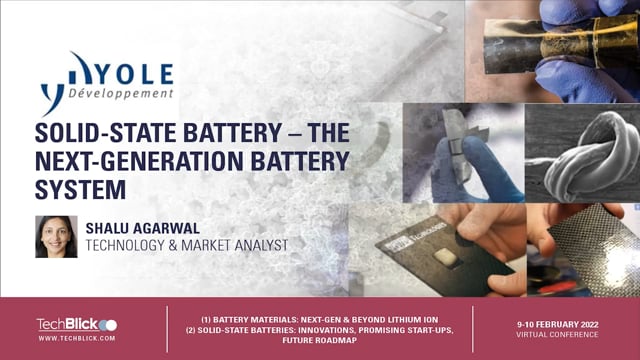
- Solid-state battery – the next-generation battery system
Speaker: Shalu Agarwal | Company: Yole | Date: 9-10 Feb 2022 | Full Presentation Li-ion batteries have become the primary technology of choice for many applications in the consumer electronics industry and empowered the electric vehicle (EV). However, the flammable liquid electrolyte of Li-ion battery is responsible for safety issues, such as electrolyte leakage, fire, or explosion. In addition, the demand for higher energy density, fast charging capability, lower cost, and safer EVs has recently created a resurgence of interest in solid-state batteries. In its talk, Yole Développement will present the advantages of solid-state batteries over conventional Li-ion batteries as well as the challenges associated with their development, like low ionic conductivity, poor wettability of solid electrolytes, high operating temperature, etc. Solid-state battery manufacturers must achieve battery production processes that are scalable and compatible with existing lithium-ion production technology to remain successful in the overfilled market. Bringing solid-state technology to mass production is a difficult task. Therefore, partnerships are more important than ever to get all the necessary solid-state battery know-how together: technology, equipment, high-volume / high-yield production, and end-systems. Today, many batteries and automotive manufacturers have presented their target roadmaps for mass production to secure a leadership role in the solid-state battery market despite the remaining technology and supply chain challenges. The solid-state battery is considered the ultimate battery technology for next-generation battery systems. Based on the achievement of technology milestones and growing supply chain collaborations, Yole Développement expects that solid-state battery commercialization will start in about 2025. However, small-scale production may happen even earlier. The intensive development efforts of EV/HEV makers and their partners will result in a progressive adoption of the solid-state battery as a “premium” battery in the 2025-2030 period. After further optimization and production scaling, solid-state batteries will spread to other applications, but their high added value will remain mainly in e-mobility applications. Yole Dévelopment will analyze the key success factors for mass production of solid-state batteries. Join TechBlick on an annual pass to join all live online conference or online version of onsite conference access library of on-demand talks (600 talks + PDFs) portfolio of expert led masterclass year-round platform https://www.techblick.com/ Our next battery-related event will take place on 15-16 FEB 2023, covering 1) Solid-State Batteries: Innovations, Promising Start-Ups, & Future Roadmap 2) Battery Materials: Next-Generation & Beyond Lithium Ion The speakers include: General Motors, Graphenix Development, Brookhaven National Laboratory, Fraunhofer IKTS, RWTH Aachen University, Lawrence Livermore National Laboratories, Meta Materials Inc, Skeleton Technologies, Solid State Battery Inc, Argonne National Laboratories, OneD Battery Sciences, VTT, Leyden Jar Technologies B.V., b-Science, Rho Motion, Wevo-Chemie, LiNA Energy, CNM Technologies, Ionblox, Empa, Zinc8 Energy Solutions, Avicenne Energy, Echiontech, South8 Technologies, Basquevolt, NanoXplore, Chasm, Li Metal, Sila Nanotechnologies, Quantumscape (tentative), Fraunhofer ISI, etc https://www.techblick.com/
- Liquid electronics: Wrapping droplets in graphene for printed microchips and wearable sensors
New research from physicists at the University of Sussex will 'significantly advance' the new technology area of liquid electronics, enhancing the functionality and sustainability of potential applications in printed electronics, wearable health monitors, and even batteries. In their research paper published in ACS Nano, the Sussex scientists have built on their previous work to wrap emulsion droplets with graphene and other 2D materials by reducing the coatings down to atomically-thin nanosheet layers. In doing so they were able to create electrically-conducting liquid emulsions that are the lowest-loading graphene networks ever reported -- just 0.001 vol%. This means that the subsequent liquid electronic technology -- whether that might be strain sensors to monitor physical performance and health, electronic devices printed from emulsion droplets, and even potentially more efficient and longer-lasting electric vehicle batteries, will be both cheaper and more sustainable because they will require less graphene or other 2D nanosheets coating the droplets. Another significant development was that the scientists can now make these electronic droplet networks using any liquids -- whereas previous research focused on conventional oils and water -- because they have discovered how to control which liquid droplets are wrapped in graphene, meaning that they can design the emulsions specifically to the desired application. Research Fellow in Material Physics in the University of Sussex School of Mathematical and Physical Science and lead author of the paper, Dr. Sean Ogilvie explains the science behind the development: "The potential of 2D materials, such as graphene, is in their electronic properties and their processability; we developed a process to harness the surface area of our nanosheet dispersions to stabilize emulsion droplets with ultra-thin coatings. "The tunability of these emulsions allows us to wrap 2D materials around any liquid droplets to exploit their electronic properties. This includes emulsion inks, in which, we've discovered that droplets can be deposited without the coffee ring effect which hinders printing of conventional functional inks, potentially enabling single-droplet films for printed transistors and other electronic devices. "Another exciting development for our research group is that we can now also design and control our emulsions towards specific applications such as wrapping soft polymers such as silicone for wearable strain sensors that exhibit increased sensitivity at low graphene loading, and we are also investigating emulsion assembly of battery electrode materials to enhance the robustness of these energy storage devices." Professor of Experimental Physics at the University of Sussex, Alan Dalton, who was first inspired by the making of a salad dressing to explore the potential of adding graphene to liquid emulsions, explains why this development is exciting: "In bringing the graphene coatings of the liquid droplets down to atomically-thin layers and in opening wide the potential for real-world applications by being able to do so with any liquid material, this research development will significantly advance the emerging and scientifically exciting field of liquid electronics." More information: https://www.sciencedaily.com/releases/2022/02/220215113414.htm
- Colorfully detecting stressed-out polymer films, gels before they break
Stretchy films and squishy gels help make wearable electronics, soft robotics, and biocompatible tissues a reality. But too much force can cause these polymers to break apart without warning. To detect stress before it’s too late, researchers reporting in the Journal of the American Chemical Society show they have designed a compound with “wings” that makes these materials change color when they are stretched or crushed. Plasticky films and polymer gels — soft 3D networks filled with liquids — can be bendable, stretchable, or compressible. And while most polymer films only snap apart when pulled too far, many gels aren’t very strong, cracking under relatively small amounts of pressure. Yet there isn’t a way to predict how tough the spongy material will be. In previous research, Shohei Saito and colleagues developed V-shaped molecules, known as flapping molecular (FLAP) force probes. FLAPs have two side structures resembling wings that flatten under pressure, causing a color change from blue to green fluorescence. This probe worked as expected when incorporated into a polyurethane film, but when added to a liquid-soaked polymer gel, the compound spontaneously turned fluorescent green without any external force. So, Saito and Takuya Yamakado set out to improve the FLAP molecule so that it would accurately detect mechanical stresses in both a polymer gel and a film. The researchers modified their earlier version by replacing the two anthraceneimide wings with pyreneimide ones, attaching them to opposite sides of the same flexible central cyclooctatetraene joint. When they added the probe into a polymer film and stretched the material, its fluorescence shifted strongly from blue to green. It also produced a color change that was visible to the naked eye. Next, the researchers incorporated the new FLAP probe into a polyurethane gel soaked in an organic solvent, creating a yellow cylinder that fluoresced blue, and then compressed the material. The cylinder’s fluorescence became measurably greener as more pressure was exerted. In their final test, the researchers placed metal letters F-L-A-P on a rectangular block of the gel. They used maps of the green to blue fluorescence ratio to calculate the pressure each letter placed on the gel below, which ranged from 0 to 1 MPa. The researchers say this study could help them develop tougher gel materials and nanoscale tension probes for cell membranes. The authors acknowledge funding from a Japan Science and Technology Agency PRESTO (FRONTIER) grant, a Japan Science and Technology Agency FOREST grant, a Japan Society for the Promotion of Science KAKENHI grant, a Japan Society for the Promotion of Science Fellowship, the Inoue Foundation for Science and the Toray Science Foundation. More information: https://www.acs.org/content/acs/en/pressroom/presspacs/2022/acs-presspac-february-23-2022/colorfully-detecting-stressed-out-polymer-films-gels-before-they-break-video.html
- New lightweight super material could battle bullets, deflect space debris
University of Wisconsin–Madison engineers have created a nanofiber material that outperforms its widely used counterparts — including steel plates and Kevlar fabric — in protecting against high-speed projectile impacts. Basically, it’s better than bulletproof. “Our nanofiber mats exhibit protective properties that far surpass other material systems at a much lighter weight,” says Ramathasan Thevamaran, a UW–Madison assistant professor of engineering physics who led the research. He and his collaborators detailed the advance in a paper published recently in the journal ACS Nano. To create the material, Thevamaran and postdoctoral researcher Jizhe Cai mixed multi-walled carbon nanotubes — carbon cylinders just one atom thick in each layer — with Kevlar nanofibers. The resulting nanofiber mats are superior at dissipating energy from the impact of tiny projectiles moving faster than the speed of sound. The advance lays the groundwork for carbon nanotube used in lightweight, high-performance armor materials, for example, in bulletproof vests to better protect the wearer or in shields around spacecraft to mitigate damage from flying high-speed microdebris. “Nano-fibrous materials are very attractive for protective applications because nanoscale fibers have outstanding strength, toughness, and stiffness compared to macroscale fibers,” Thevamaran says. “Carbon nanotube mats have shown the best energy absorption so far, and we wanted to see if we could further improve their performance.” They found the right chemistry. The team synthesized Kevlar nanofibers and incorporated a tiny amount of them into their carbon nanotube mats, which created hydrogen bonds between the fibers. Those hydrogen bonds modified the interactions between the nanofibers and, along with just the right mixture of Kevlar nanofibers and carbon nanotubes, caused a dramatic leap in the overall material’s performance. “The hydrogen bond is a dynamic bond, which means it can continuously break and re-form again, allowing it to dissipate a high amount of energy through this dynamic process,” Thevamaran says. “In addition, hydrogen bonds provide more stiffness to that interaction, which strengthens and stiffens the nanofiber mat. When we modified the interfacial interactions in our mats by adding Kevlar nanofibers, we were able to achieve nearly 100% improvement in energy dissipation performance at certain supersonic impact velocities.” Bring on the bullets. The researchers tested their new material using a laser-induced microprojectile impact testing system in Thevamaran’s lab. One of only a handful like it in the United States, the system uses lasers to shoot micro-bullets into the material samples. “Our system is designed such that we can actually pick a single bullet under a microscope and shoot it against the target in a very controlled way, with a very controlled velocity that can be varied from 100 meters per second all the way to over 1 kilometer per second,” Thevamaran says. “This allowed us to conduct experiments at a time scale where we could observe the material’s response — as the hydrogen bond interactions happen.” In addition to its impact resistance, another advantage of the new nanofiber material is that, like Kevlar, it is stable at both very high and very low temperatures, making it useful for applications in a wide range of extreme environments. The researchers are patenting their innovation through the Wisconsin Alumni Research Foundation. Claire Griesbach, a doctoral student in Engineering Physics, is a co-author of the study. This research was supported by funding from the U.S. Army Research Office and the UW–Madison Office of the Vice-Chancellor for Research and Graduate Education. For more information: https://news.wisc.edu/new-lightweight-super-material-could-battle-bullets-deflect-space-debris/
- Applications Utilising Roll to Roll Fexible Hybrid Electronics
Speaker: Steven Bagshaw | Company: CPI | Date: 11-12 May 2021 | Full Presentation Bio Steve is responsible for business development activities across CPI’s printed electronics platform. Steve’s expertise lies in the area of printed electronics, printed sensing and its role in the development of the internet of things and industry 4.0. Steve has delivered on a number of successful private projects at CPI, helping new research ideas develop from prototype and through to commercial deployment. Clients include industries such as automotive, aerospace, defence, packaging and medtech. These projects involve working with companies of all sizes ranging from large corporates to SMEs and academia. Previously Steve held marketing positions at CPI, where he was responsible for managing the marketing operations of CPI’s printable electronics division. Steve’s role was to provide an end user focus in the scale up and commercialisation of products and processes related to printable electronics. He has extensive knowledge in emerging technology areas such as intelligent print, printed lighting and enabling technologies such as materials integration and barrier encapsulation. Prior to joining CPI in 2008, Steve graduated from Northumbria University in Business Studies and is currently studying an Executive MBA at Warwick Business School. Join TechBlick on an annual pass to join all live online conference or online version of onsite conference access library of on-demand talks (600 talks + PDFs) portfolio of expert led masterclass year-round platform https://www.techblick.com/ And do NOT miss our flagship event in Berlin on 17-18 OCT 2023 focused on Reshaping the Future of Electronics. This event attracts 550-600 participants from all the world and offers a superb ambience and dynamic exhibition floor. To learn more visit https://www.techblick.com/electronicsreshaped To see feedback about previous event see https://www.techblick.com/events-agenda
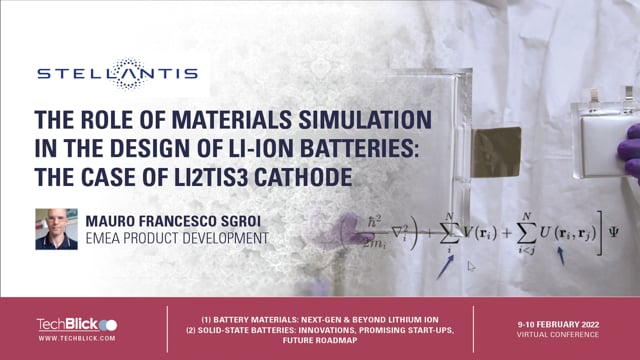
- The role of materials simulation in the design of Li-ion batteries: the case of Li2TiS3 cathode
Speaker: Mauro Francesco Sgroi | Company: Stellantis | Date: 9-10 Feb 2022 | Full Presentation The current worldwide effort to electrify the private transport sector is based on the availability of Li-ion cells with high specific energy, long cycle life and acceptable cost. Electrodes and electrolytes materials play a fundamental role in determining the performances of Li-ion cells. The use of critical raw materials, such as cobalt and graphite, is a crucial aspect for the LIBs market and novel materials have to be developed. Computational materials science is widely used to design new materials and to optimize the properties of the existing ones: in the field of Li-ion cells this approach led to a deeper understanding of many chemical-physical phenomena associated with the operation of the cell. After a general introduction, the main computational approaches to simulate the Li-ion cells materials will be presented including DFT methods and molecular dynamics. Finally the talk will concentrate on the development of a robust and predictive DFT method for the description of a disordered cubic Li2TiS3 system, a cobalt-free high capacity material showing promising properties as cathode in all-solid-state Li batteries. Join TechBlick on an annual pass to join all live online conference or online version of onsite conference access library of on-demand talks (600 talks + PDFs) portfolio of expert led masterclass year-round platform https://www.techblick.com/ Our next battery-related event will take place on 15-16 FEB 2023, covering 1) Solid-State Batteries: Innovations, Promising Start-Ups, & Future Roadmap 2) Battery Materials: Next-Generation & Beyond Lithium Ion The speakers include: General Motors, Graphenix Development, Brookhaven National Laboratory, Fraunhofer IKTS, RWTH Aachen University, Lawrence Livermore National Laboratories, Meta Materials Inc, Skeleton Technologies, Solid State Battery Inc, Argonne National Laboratories, OneD Battery Sciences, VTT, Leyden Jar Technologies B.V., b-Science, Rho Motion, Wevo-Chemie, LiNA Energy, CNM Technologies, Ionblox, Empa, Zinc8 Energy Solutions, Avicenne Energy, Echiontech, South8 Technologies, Basquevolt, NanoXplore, Chasm, Li Metal, Sila Nanotechnologies, Quantumscape (tentative), Fraunhofer ISI, etc https://www.techblick.com/
- High-Resolution Printing from 2D to 3D for Additive Manufacturing of Printed Electronics
Speaker: Doyoung Byun | Company: ENJET Inc| Date: 11-12 May 2021 | Full Presentation Bio Doyoung Byun received the PhD degree in Mechanical and Aerospace Engineering from the Korea Advanced Institute of Science and Technology (KAIST), Korea, in 2000. He has worked in several institutes and academies and founded the Enjet in 2009 in order to commercialize his high resolution printing and coating technologies for the printed electronics. Since 2009, he has served as CEO in the Enjet. He has developed the novel femto-liter droplet dispensing technology, electrostatic spray nozzle for functional coating, micro-fluidic devices, and MEMS devices. Based on these core technologies, he could commercialize ultra-fine printing and spray coating solutions for OLED display, micro-LED display, mobile phone, and bio-medical applications. The Enjet is a high resolution inkjet printing solution leader and has a vision to provide innovative tools of printed electronics (2D and 3D), replacing conventional vacuum processes in OLED, PCB, Semiconductor, Glass, Bio-medical, and energy industries. The Enjet has further dreams to develop 3D additive manufacturing solutions for printed electronics. The Enjet has been developing a high resolution inkjet head with multi-nozzles, which can dispense higher viscous ink than the conventional ones and form pico-liter or even femto-liter droplets. With this novel inkjet head, we can print and manufacture 3D electronic devices from the provided model data and personal customized products. Join TechBlick on an annual pass to join all live online conference or online version of onsite conference access library of on-demand talks (600 talks + PDFs) portfolio of expert led masterclass year-round platform https://www.techblick.com/ And do NOT miss our flagship event in Berlin on 17-18 OCT 2023 focused on Reshaping the Future of Electronics. This event attracts 550-600 participants from all the world and offers a superb ambience and dynamic exhibition floor. To learn more visit https://www.techblick.com/electronicsreshaped To see feedback about previous event see https://www.techblick.com/events-agenda